Dona Roberta is around 38 yrs old, has 2 girls and 2 sons. They have a nice house, and all the kids go to school. Generally, the family’s doing well and has money to make sure George (Jorge Luis), their youngest, has nice clothes and a bike. The simple fact that all their girls still go to school is a good sign of how things are in the family as well.
About 8 or 9 months ago, Dona Roberta came to the health post and asked for a pregnancy test. It came out positive. She’s a friend of Adilia’s and even brought her oldest daughter along with her to sign up for my health promoter course.
This past week, Dona Roberta gave birth to a baby boy. Two days later, he died. George came to my house the next day to let me know about the death of his baby brother. He said he heard the spirits come in the house – a bird and another animal (he didn’t know the word for it in Spanish, only K’iche) that are known for announcing death. He was so scared he didn’t get out of bed to let his mom know they were coming. Dona Roberta, her husband, and the baby were sleeping when the spirits came. His nose was bleeding when she woke up. They have a car so they took the baby to the hospital. He was dead upon arrival at the hospital.
I don’t know what’s the saddest part – that Dona Roberta never understood what the doctor was trying to explain about what happened to the child or that this is the 3rd baby she’s lost.
Dona Roberta has been in a lot of pain, emotional and physical, for a long time. She’s been receiving injections for the cysts on her ovaries, and seems to be walking around more and moving more each day. I’ve only been to visit her 3 or 4 times, but every time she feeds me then lets me know how much she cares for me and how much she’ll miss me when I’m gone. She is a light in my life here in San Ramón and I will be deeply sorry to leave her when the time comes.
Friday, July 15, 2011

Tuesday, May 3, 2011
The Slump
So I've been putting off posting these short entries. To warn you - they may put you in a bad/depressed/sad mood, because that's what I was in when I wrote them. March and April weren't the easiest months for me, and evidently, it's normal to have a slump about 9 months into being at site. Good news is that May/tons of work/Holy Week vacations have pulled me out of that slump and I no longer wishing I would wake up in America (it only happened a few times, don't worry).
Does “integrated” mean that you got 23 flies chillin on your bedroom ceiling? Or does it mean visits from Carlitos asking you to help out with his biology project? It could mean going to work every day and getting fair prices at the market. I’m trying to figure out what to write for the section titled “Tell Your Story” on my Volunteer Report File that gets sent to Washington twice a year. I’ve been invited to a few weddings. Had a few birthday parties with the host family. Carried a basket on my head home from market. Cooked my own corn and taken it to the local molino (or mill – where I was almost laughed out of the place after the women saw me show up in the doorway and then have about 7 kernals of corn for my tortillas). Yet I still feel like I am not integrated, or even close to being integrated into this community. I almost feel like by asking that of me, Washington is asking for the impossible – maybe not completely impossible, but highly improbable. Don’t get me wrong – I’m not saying that I should be integrated after merely 9 months in site, or even within the allotted 2 years of service time. Maybe I’m just writing this to give myself less of a hard time. Maybe I should get a fly swatter…
I realize that here, you do most things alone. And it’s not just most things: it’s usually the vast majority of your day that you spend alone. I have site-mates, so I actually get to see other people and friends more often than most. But, for example, today: I woke up, made myself some food in my house, went to the Puesto, went down on the bus, sent emails, went to a meeting (where 2 other volunteers were participating as well), ran an errand, took the bus up to Shannon’s community, ate lunch with Shannon and other Puesto workers, went on home visits all afternoon, rode down back to San Cris, saw Kate for a few minutes, went to run errands in Salcajá, before getting on a pickup truck for San Ramón, walked home alone, made dinner alone, ate alone, and am now hanging out. By myself. All interactions with people I consider friends were very limited to no more than 10-15 minutes a piece. I guess I’m just used to doing most things with friends, whether it’s a roommate eating breakfast at the same time, seeing people at work all day, going to see friends after work, making dinner with friends or roommates, and then going out/watching a movie/etc. with people. It gets lonely out here. And the saddest part of it is: I have multiple site mates (not actually where I live, but I see them all a fair amount) and live near a big city where I get to see a ton of volunteers on a regular basis. So the real question is: Why do I feel so alone?
Wednesday, December 29, 2010
De plano...
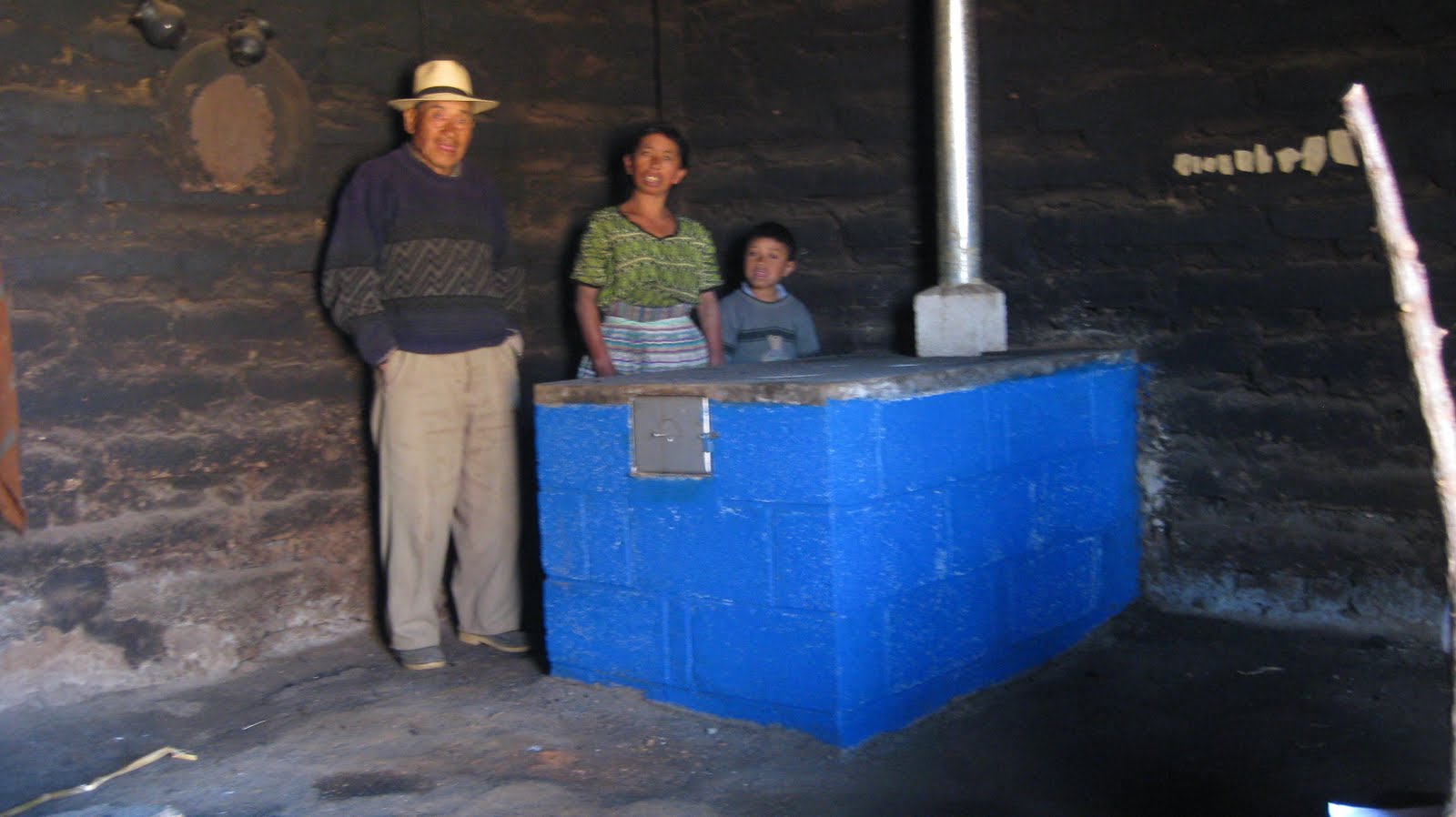
Adilia made a good point: over the last 4 months since I got to site, nearly every single thing has gone our way. We’ve cut it more than close on numerous occasions, but we’ve achieved everything we’ve set out to do on more things than a sane person would think about taking on. The day the materials arrived for our infrastructure projects, not everything went our way. Actually, a couple of very important things went running away from us in the opposite direction. By the end of that day, I had hidden tears from 2 different groups of women, postponed the materials drop-offs, been given a small pep-talk by 2 different groups of women, and been brought into the bank manager’s office to be told that all I needed for my troubles to disappear was one. Little. Stamp. That’s right – 2.5 days of running around wondering if we had completely screwed up our projects and made a group of 21 women come to 4 months of health talks for no reason, all for a little stamp.
By the time the demonstrations rolled around, I had concluded that things were pretty much out of our hands at this point. People weren’t showing up to the required construction demonstration? “De plano, no van a recibir su proyecto” (I guess they won’t receive their project then), The carpenter refused to explain the steps he was taking in the construction, thus negating the very reason why we had demonstrations? “De plano, no quiere escuchar mandados de una mujer” (Looks like he doesn’t want to listen to women – me and Kate), Only half the women brought their carpenters and/or husbands to the demonstrations? “De plano, van a ser responsables para la construccion adecuada de su proyecto” (Well, they’ll have to be responsible for the adequate construction of their project then).
“De plano,” like many other phrases in Spanish, doesn’t have a single, fixed meaning or definition, but rather carries a general feeling and can be used in a number of different situations. Basically, it means “okay” or “that’s alright” or “probably”. It’s like you’re submitting to something, like there’s nothing you can really do about what’s happening, it’s just the way it is. Americans tend to fight, well maybe not fight, but definitely have a sense of entitlement that tells them they can change the situation in their favor and not have to submit to whatever is in opposition. Our “Culture Matters” book that we received in training called the Guatemalan attitude “Defeatist,” and I’m not sure I would call it that, but I wouldn’t say they go looking for conflict either. I had to tell a woman that she wasn’t going to receive her improved stove because she didn’t comply with what we asked of every single participant in the project, and she replied, “De plano, I won’t receive my stove.” It was so hard to tell this woman, who probably needed this stove more than most in the group, that because she wasn’t able to leave her house and come to the demonstration, that because she didn’t have anyone else to help her prepare and deliver lunch to a group of workers, that she was losing out on a way to improve her family’s health.
I’ve found there are very few easy decisions in this job. Nothing is black and white. Nothing is as simple as it seems. But, de plano, I don’t want to be doing anything else.
Monday, November 15, 2010
Oh what up sunshine

Yes, you heard right: rainy season is OVVVVERRRR. I don’t want to jinx it, but considering we haven’t had rain in a week and it’s becoming colder every morning and night, I’m gonna go ahead and jump to the conclusion that we’ll start seeing less landslides. Got a picture of the first frost as well. It’s funny how you can talk for hours about the cold here, even though you can only see your breath until about 9 a.m. and then it becomes “so hot” – as in 80 degrees with zero humidity. I don’t know if it really is how strong the sun is or if it’s being told how white I am every day, but I get burned with a quickness out here.
Also, as you can see in the picture, the tapixca (tah-peeshka) came. Everybody harvested their maiz in the last few weeks, so San Ramón is looking pretty weird these days. You can see for miles, houses pop out of nowhere, and it’s not quite as scary walking through the fields as you can see dogs running at you instead of being surprised at the last second.
So when I first got to site, I was warned by Kate (the PCV who’s been working here for a year) and Adilia (my counterpart) that August, and maybe a little of September, would be really busy. I was excited because this is exactly what I asked for. I figured things would slow down in October and definitely taper off when we got close to the holidays. Turns out I was wrong. So, so wrong. After organizing a district-wide HIV/AIDS training the other week, I ran into the main office near the capital for Reconnect for a few days (trainings, talks, making sure we’re not having mental breakdowns after our first 3 months in site), but have so much work that I couldn’t stick around and take language classes with the rest of my training group. Not sure I’ve stopped running since then…
Why all this work you say? Because we’re putting on THE BEST KIDS CAMP IN HISTORY. Alright, that’s definitely an exaggeration, but how excited these kids and their parents are definitely is evidence of how big a hit it was last year. Kate, along with the help of 6-8 other volunteers, put on a 5-day kids camp that included English classes, art classes, a basketball tournament for girls, and daily themes like Self-Respect, the Environment, and Preventive Health. This year we’ll be doing a lot of the same stuff, with pre-school through 3rd grade in the morning and 4th-6th grade in the afternoon. I’m seriously thinking about stocking up on energy drinks for that week as we already have more than 300 kids signed up. Now comes the fun part: getting funding for snack, materials, and t-shirts for over 300 kids. All before December 6th. Crazier things have happened, right? RIGHT?
Just to make sure we wouldn’t be bored with only one large project on our plate, we have the culmination of our infrastructure project in the next few weeks. Our proposal was approved by USAID a few months ago, but the funds have finally arrived! Now all we have to do is buy all the materials, hand them out to the families, verify that all families with latrines have their hole ready to go and adequately dug, have 3 days of demonstrations on how to build each project, and visit each house to make sure they’ve built their projects within the allotted 2 weeks so I don’t have to go around taking their materials back. All while preparing for the camp. No sweat. I love November.
Sunday, September 26, 2010
¨You need to take your watch off¨
I have to admit – I asked for it. I really did. When I said I wanted a ton of work RIGHT when I got to my site, I was worried about being lonely, about having too much time to sit and think about what I’d gotten myself into, about feeling useless and like I wouldn’t be able to find enough work to fill up 2 years. Well, my boss took that request to heart. Since the day I arrived at site, I have had something (more like 3-5 somethings) to do every single workday. And most weekends as well.
The good news: I took off my watch. You’d think after living in a few different Latin American countries where time is relative, very few people wear a watch (and those that do are doing it for style), and it’s a complete accident if everyone is on time to a meeting, that I would let go of some of my anal-retentive tendencies when it comes to time. But, no. Last week I was stressing out about how we were going to provide 500 people with snack and tie off every detail of the Reproductive Health march coming up, and Adilia (my counterpart) finally said, “You need to take your watch off.” So, I did. And I was 85% stress-free. Until the day of the march, of course.
So, the march: the idea of simply having a health talk for all the Mi Familia Progresa groups in my town (which is a government-run subsidy program that basically pays women to take their kids to the health post for checkups, receive health talks, and make their kids go to school) to celebrate Reproductive Health Month turned into a 500 person march celebrating the month as well as women’s rights and self-esteem. Each group of Mi Familia Progresa was given a talk on a certain topic (breastfeeding, self-esteem, women’s rights, family planning, etc.), made their own materials for the march, and then were told it was a mandatory activity (and thus wouldn’t have to come for their checkups in September).
You should have SEEN the giggles in these meetings when we told them what we had planned. I mean, for this town, it’s weird if a woman talks much above a normal level unless she’s yelling at one of her kids, so it’s a pretty ridiculous idea that a ton of women would get together and parade around the town shouting things like “MY BODY BELONGS TO ME,” or “NO ONE DESERVES ABUSE,” or “IT’S MY RIGHT TO DECIDE HOW MANY KIDS I WANT.” We were a little worried about the authorities being into it, but they ended up making us invite every school band in town. Not only did the local mayors lead the parade, the Municipal Mayor came all the way out as well. We invited about 5 more organizations (before begging them for materials and snacks, of course), so we added another 250 participants to our groups to make it a 500-person march. Even though my group did not win most animated (it took us the entire route to get our chant down pat), it was so crazy to see these women marching through their town holding signs up with things like “INCEST IS WRONG,” and “I AM NOT AN OBJECT,” and “I HAVE VALUE.” Yeah, they were still pretty meek and didn’t shout as loud as I’d have liked. But at the very least, they did it. Sure, we pretty much made them, but the fact that they know that something like this is possible now, is pretty awesome. Now only if we could convince them without having to bribe them with snacks and threaten taking away their monthly stipend…
Wednesday, July 21, 2010
Oh, so this is for real now?

Did I say in my last post that my site wasn’t going to be super rural? Well, I take it back. I still stand by the relative accessibility to Xela, but the fact that there’s nowhere to buy tortillas or bread (both staples, you can always find at least 3 stores with them in any town) anywhere in San Ramón really says something.
The good news: I have a place to sleep, my counterpart is just as crazy as I am (probably crazier), I may have accidentally joined a basketball team in a town nearby, and there is evidently a ton of work to do RIGHT away. And by a lot of work, I mean we did 22 house visits on my first day of work and 23 on my 2nd day.
Normally, I wouldn’t be starting my infrastructure projects until the 2nd year of my service, but I’ve been placed in a town that’s had a volunteer working here for the last year. Kate’s been in San Ramon as well as 2 other towns and her own municipality working in the Healthy Homes project since last July, so she’s coming into the project phase of her service. She’s decided that she wants my town to be the first to get projects, so a few months ago, the entire area covered by the Health Post was surveyed to see what services they had within the home (water, lights, cement floors, latrine, stove – instead of an open fire on the floor). Now that we’ve selected the families most in need to participate in the project, we had to hand-deliver all 50-some invitations over the last 2 days.
This doesn’t seem like too big a task, but this isn’t like taking a stroll through Cary Town. The majority of the houses are islanded in the middle of endless cornfields and guarded by the meanest dogs to ever come out of hell. Not to mention the dogs guarding the cornfields themselves and the little paths through them. All I have to say: thank GOD I found a big stick before we found the really mean ones. My counterpart Adilia has had a bit of experience with these “chuchos” (according to the scar across her right cheek bone), so I took her advice when she told me to stay calm and not release pheromones out of the pure fear and adrenaline pouring out of me. To her credit, breathing deeply and passing by them at a normal pace worked pretty well, except for the ones that follow you as soon as your back is turned and continue to be on the attack even when I act menacing with my stick. Thus why I jumped at the little boy running out of the cornfield and then again at the cat chewing on a plastic bag under the table at dinner tonight. I'm sure my love of dogs will come back any day now...
Training Pt. 3 - The Downhill

Ahhhh so much has happened since I last wrote… where to start… where to start…
I guess I can start with FBT – Field Based Training. Myself and 6 other trainees went with a driver, language teacher, and Basilio – our Associate Peace Corps Director for the Healthy Homes project (kind of a big deal) to San Vicente Buenabaj in Totonicapán to visit Phillipa Wood. Her aldea (suuuuper small town outside of a Municipality, which are what we would think of as small towns) is about an hour outside of Quetzaltenango/Xela, which is the 2nd largest city in the country. Each trainee got to give a health talk to one of her health promoter and/or midwife groups in the area. I gave a talk about where illnesses come from in the environment around us and how we can prevent those sicknesses – aka washing your hands. The talk went okay, but I didn’t know I would need a translator for the women who only speak K’iche, so things got a little confusing at times. The big hit was definitely making your own soap from warm water, a recycled plastic bottle, and bits and pieces of cheap/used soap. It was an absolutely gorgeous area, but real chilly at night and in the morning. Evidently Phil regularly finds ice in her “hot” water bottles for her bed and her pila (or water deposit) during January and February. Too bad Peace Corps doesn’t come close to paying us enough to cover the ridiculous electricity bill a space heater would rack up.
The other week I went to visit another volunteer, Esther, also right near Xela in the department of Totonicapán for Independent Directed Activities. Our Tech Trainer, Carolyn, said Michelle and I would have an IDA on crack, and she was right: we visited the Area de Salud (main health office for the department), did a radio show, gave 2 trainings in Dynamic Education, did home visits in one of her aldeas, and climbed like 7 mountains (only, only like 2, and it was gorgeous, but both were unexpected). Esther’s amazing, and incredibly busy – girl’s got all her work around her site that includes a few health promoter groups, a youth group, and starting to figure out her infrastructure projects, as well as being the President of the HIV/AIDS committee. But that’s pretty much like every volunteer you meet – you’re just continuously impressed by how much they’re doing it and how well they’re doing it, you just keep wondering if you’ll ever do as well as them or be at the point they are.
After just over 2 months in country, I found out where I will be living and working for the next 24 months. The aldea is called San Ramon: it’s right outside of this big town called San Cristóbal in the department of Totonicapán. It’s not a completely new site, because a girl named Kate has been working there for a year, but I’ll be able to focus all my efforts on just this area. I’m super close to Xela, only about 30 minutes, so I’ll have the best of both worlds: a super rural aldea, but only a short bus ride away from a huge market that will sell things a lot cheaper than out in the country (because everybody goes to Xela to buy in bulk then go to smaller towns to sell, the price gets jacked up). Also, my plans to learn the drums while I’m here, have a gym to go to once in a while, and maybe find some dance classes will go a lot smoother with this site. Not to mention being a central meeting point for the majority of volunteers. I’ll be honest – I wasn’t so excited when I got my folder. All along I’ve been expecting to go to Huehuetenango (near the Mexican border) to a suuuuuper rural town, a new site that’s never had a volunteer before, and live and work in a completely different environment than I’ve ever known. This is pretty much the exact opposite of that haha. That said, this site has a lot of pros: I have a SUPER energetic local counterpart that’s really excited for me to come and start work right away, and my director has said there is literally too much work to do there.
Subscribe to:
Posts (Atom)